A Quick Overview of the Plastic Extruder
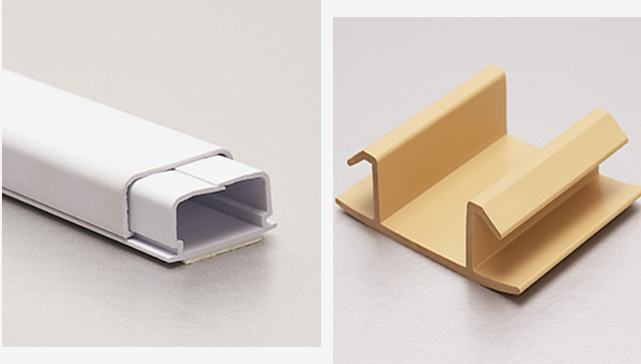
A plastic extruder is a machine that melts and shapes raw plastic pellets or flakes into channels, tubes, sheets and other profiles. Using the physics of friction and pressure, it plasticizes raw material and squeezes the molten plastic through a shaping die at the output end.
During the process, gravity feeds pellets through a hopper into the extruder’s enclosed screw conveyor channel. The screw moves the plastic forward, shearing and heating it — aided by electric heaters built into the barrel — until the molten plastic is pushed, or extruded, through the die. The newly formed profile is instantly cooled with water, pulled through by conveyors, and cut to length.
Extruded profiles play a role in virtually every industry: window profiles, building siding and trim, gutters, sealing sections, hoses, tubes, pipes and drinking straws. Sheets are used in packaging and thermoforming; rods and thick-gauge sheets are machined by the automotive, aerospace and construction industries into close-tolerance parts.
The process is highly customizable and handles both high-volume production and short runs, making extrusion one of the most diverse and economical methods of plastic fabrication. Any thermoplastic can be extruded — HDPE, LDPE, PETG, PVC, butyrate, vinyl, polypropylene, polystyrene and more.
Because extrusion outputs a continuous flow of smooth, thoroughly heated and mixed material, extruded plastics seldom have bubbles or inconsistencies — they are valued for structural integrity and consistent, precise profiles.
Have a project in mind?
Send us your drawing or spec — our engineers reply within 24 hours.